

大学体育赛季取得成功的关键
How to Have a Thriving Athletic Career Throughout College
From the moment you arrive, to shaking hands at the end of your final match and closing the competitive season for the year, a lot of work is required from yourself, teammates, and the coaches to have a successful competitive season.
With this article, Immie Cowper from Keystone Sports Germany bring you insights on effectively preparing and performing during the college sports season, along with personal highlights from Lilly Stienemeier, a Keystone Sports tennis player and recent MSU Denver graduate.
The aim is to give you a clear understanding of the differences between in-season and out-of-season, and what it takes to end your competitive year successfully. While the focus will primarily be on tennis in this article, the principles for success apply across all 大学体育!
What Sports Are Played in What Seasons?
Every sport on offer in college will have a main competitive season. Some college sports such as field hockey, soccer, and volleyball are fall sports, meaning their main competitive season will be in the first semester of the school year, starting and concluding between August and December.
On the other hand, tennis, track & field, and golf are just some examples of the sports which have a competitive season in the spring, starting in January. For an easy overview, we have listed the largest 大学体育 and their seasons by month below.
College Sport Seasons by Month
Fall Season (August – December)
– 足球
– Field Hockey
– 排球
– Football
– Cross Country
Winter Season (November – March)
– Swimming & Diving
– Indoor Track & Field
– Ice Hockey
– Wrestling
– Basketball
Spring Season (January – June)
– Tennis
– Golf
– Outdoor Track & Field
– Baseball
– Softball
– Lacrosse
So, what happens in the other semester? Free time? Not quite! This is where the preparation happens. Typically involving high amounts of fitness, strength work, and on-court practice so that when your first match arrives, you are in the best shape possible.
College sports that compete in the fall usually arrive at university earlier for pre-season since their matches start close to the beginning of the school year. For spring sports, preparation takes place throughout the fall semester.
College Sports Season: The Difference Between Fall and Spring
For college tennis, a key difference between the two semesters is that throughout the fall, although you still compete, it is with an individual focus. Fall schedules consist of a handful of invitational tournaments, each one hosted at a university with many different schools participating. You’ll compete as an individual and results will not go towards your college team’s ranking. However, due to the individual focus, the fall also holds the opportunity to compete at the individual national championships.
Even though you are not in the main competitive season, it is still very important and paramount to the success of the team in the following semester. These beginning months are key for personal development, match practice, and give the college coach a great idea for the order of the line-up and doubles pairings for the spring. The fall is also hugely important to build relationships and bond as a team so that when January arrives, you are ready to battle and compete with the same goals and motivation.
During the spring season, college tennis teams will have anywhere from 1-3 matches per week with a mixture of home and away fixtures. Every match completed will count towards your team’s ranking which can determine your conference tournament position as well as your national ranking. This can gain you direct qualification to the national championships post-season. It is incredibly busy, and you’ll witness the time fly before your eyes!
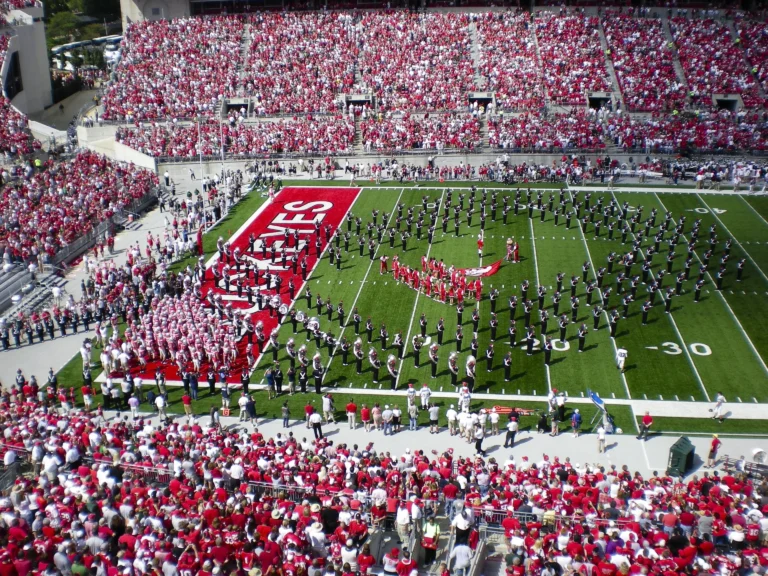
Lilly mentioned that some of her fondest memories have been during the competitive season and the sense of pride you have representing the school you are wearing:
“The university community and team you have joined and become immersed in, along with the logo on your chest, fills you with a fire and readiness to fight and battle to win every single time you step on the court.”
The college sport atmosphere is definitely one of a kind!
How to Balance Academics and Sports During Season
It goes without saying that once you choose to take the US College pathway and when you become a student-athlete, you have responsibilities beyond just what is required of you at practice or during a match. Academics are imperative to sporting success because if the baseline academic standards are not met, then participation in competition can be withheld.
Being an athlete doesn’t give you a free ride to straight A’s (unfortunately!), and regardless of whether you are in the main competitive college sports season or not, you will always have exams, classes, and assignments to complete. This is where forming clear and honest relationships with your professors is key.
Professors are aware that student-athletes will have to travel and are likely to miss classes on occasion due to the match schedules and travel needs. They want you to succeed in the classroom and on the sports field. Though, it can be greatly beneficial if you simply take the time to introduce yourself at the beginning of the semester and bring awareness to the teacher that you may be missing classes or exams on certain dates. Professors will try their best to accommodate and work with you to find the best solution!
Long bus rides, flights, nights spent away, all contribute to the challenge of being on top of your classes. As a college student-athlete, you may find yourself writing class notes during your bus ride, or preparing for an exam once you arrive at the hotel the night before a match. When speaking with Lilly, she often mentioned whether you enter university with these skills or not, the college athlete lifestyle forces you to be organized, plan ahead, and understand the necessity of good time management.
She explained: “College sport combined with being a student adds another load to your plate. You must be organized and responsible for what you need to do and when it needs to be done. You can’t skip out on classes as you need to maintain your grades, and even more so if you strive for the top grades. Often my day off each week would be filled with making sure my schoolwork was finished and any revision for exams was completed, then any spare time would be doing grocery shopping, laundry, and planning my next week!”
Lilly’s Most Memorable Moments as a College Tennis Player
Sitting down a day after graduation and reflecting on the past four years, discussing all the challenges, triumphs, and growth that comes with taking the student-athlete pathway, one of the most standout moments for Lilly was the clinch-matches.
During the college tennis season, a tennis dual match is combined of both doubles and singles matches, with the overall winning team being the ones who tally the most individual wins. Just like any tennis match, there cannot be a draw. College matches are often competitive and tight and come down to the last singles match to decide the winner – a clinch match is the decisive match where whoever ends victorious also determines the outcome for the whole team.
They are exciting, tense, high-pressure, exhilarating – a unique competitive situation where you feel every emotion possible. During these matches the rest of the team lines up on the center line of the next-door court, the same with your opponent’s team, as well as the coaching staff. All eyes are eagerly watching, and it is a battle until the very end!
For Lilly, these were her favorite matches, and incredibly, she only ever lost one clinch match. When asked what her favorite moments were, the phrase ‘clinch matches’ was instantaneous. She said “I can remember every single one of them. I’ve never felt so many emotions than in those times. I will miss the competitiveness of those situations. It is so intense and so much more than just finishing a close match!” Players usually either love or hate these matches, but for Lilly, they were the highlight!
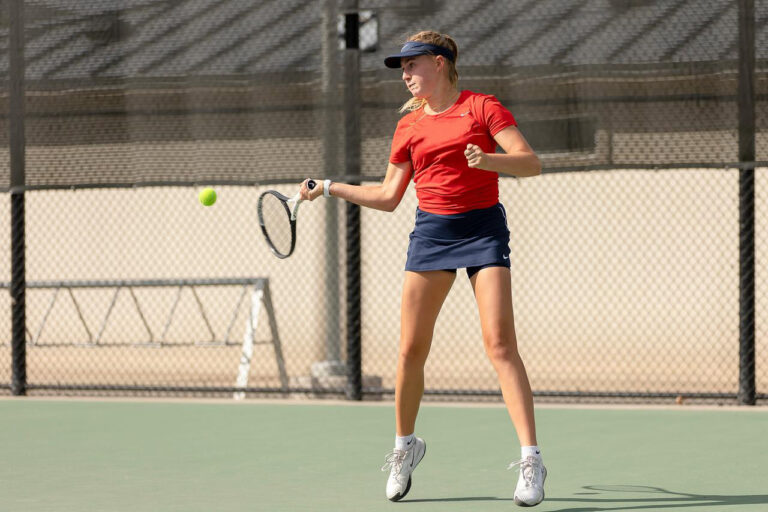
Throughout the years of being a student-athlete, you learn the rhythm, accountability, and what is expected of you during both the fall and spring. Hard work becomes normality, and you start to thrive in the excitement and dedication that goes into a college sports team.
Another key memory for Lilly was the connections she made as a college student-athlete. Training alongside the men’s tennis team, living near the girls on the volleyball team, or being in the student-athlete study hall and surrounded by fellow student-athletes, all wearing the school gear.
Lilly said, “The community you build and become a part of as a student-athlete at college is like no other. You bond and get to know so many like-minded and dedicated athletes who are going through the same lifestyle and experiences as you. You are proud to wear the logo.”
Many junior sports are very individual, but when you get to university in the USA, you become part of a team. This pushes you harder to give your all, not only for yourself but also for your teammates and coaches.
Health and Performance Tips for Student-Athletes
What do you need? How do you personally like to prepare for matches or when you have a tough week ahead?
Colleges and universities in the US are home to some of the best facilities and resources for athletes. From weight rooms, sports pitches and courts, training rooms, rehab facilities, and food courts. Being a student-athlete you are never far away from fulfilling a need.
During your main competitive season, it is so important to maintain a healthy body and mind, keeping injuries at bay and your body healthy. In order to do so, we highly emphasize and advise student-athletes to uphold honest and regular communication with teachers, coaches, and training staff.

If you feel a slight pain somewhere in your body, speak up and seek treatment, ensuring you are doing everything you can to keep your body injury-free, even if it requires extra time before and after practice sessions. Extra stretching sessions or rehab treatments for a few weeks can prevent you from spending months out of competition.
When you are faced with multiple fixtures per week, sleep and nutrition can be the golden key to success. They can form the backbones for high energy, concentration, and recovery. With practice sessions daily, and often in high temperatures, hydration and nutrition are fundamental to good health and keeping you physically and mentally present and able to maintain the high working efforts.
Being athletes, of course, you need to be in good shape, and to advance your fitness capabilities, consuming a well-rounded diet fulfilling your body’s macro- and micronutrient needs will not only provide you with the necessary energy levels, but also aid in the muscle repair and recovery after hard practice sessions and long matches.
Performance Program – Your Support to Excel as a Student-Athlete
In other words, we at Keystone Sports understand the unique demands you face as a student-athlete. We know your daily life means balancing academics and sports, while striving to perform at your peak in your sport. That’s why we created the Keystone Sports 体育表现提升计划.
Developed by Dr. Darren Treasure, an expert and professor in Sports Psychology, and Clive Brewer, expert in Athletic Performance and Athlete Development, our program is designed with student-athletes’ success in mind.
Our program offers a 360-degree approach, covering athletic and mental performance, along with lifestyle guidance. Whether you’re gearing up for competition or preparations during the off-season, our program’s experts provide the tools and techniques to help you excel.
Request more info about the program via the link below!
Are you curious about the two renowned experts behind Keystone Sports Performance Program? Read the full article 关于 the launch of the program and learn more about Clive Brewer and Dr. Darren Treasure.
分享这篇文章

关于作者
伊米·考珀
After graduating from UNC Charlotte with a bachelor’s in psychology, Immie returned to Europe and completed a master’s in Sport Psychology from the German Sport University. Throughout her time playing sport, Immie developed her passion of helping others and the importance of prioritizing the balance between physical and mental well-being. Now as a Placement Specialist at Keystone Sports, Immie is able to guide upcoming talented athletes to find opportunities where they will be thriving on the sports field, in the classroom, and in their personal lives.
更多相关文章
学生运动员的幸福感与心理健康
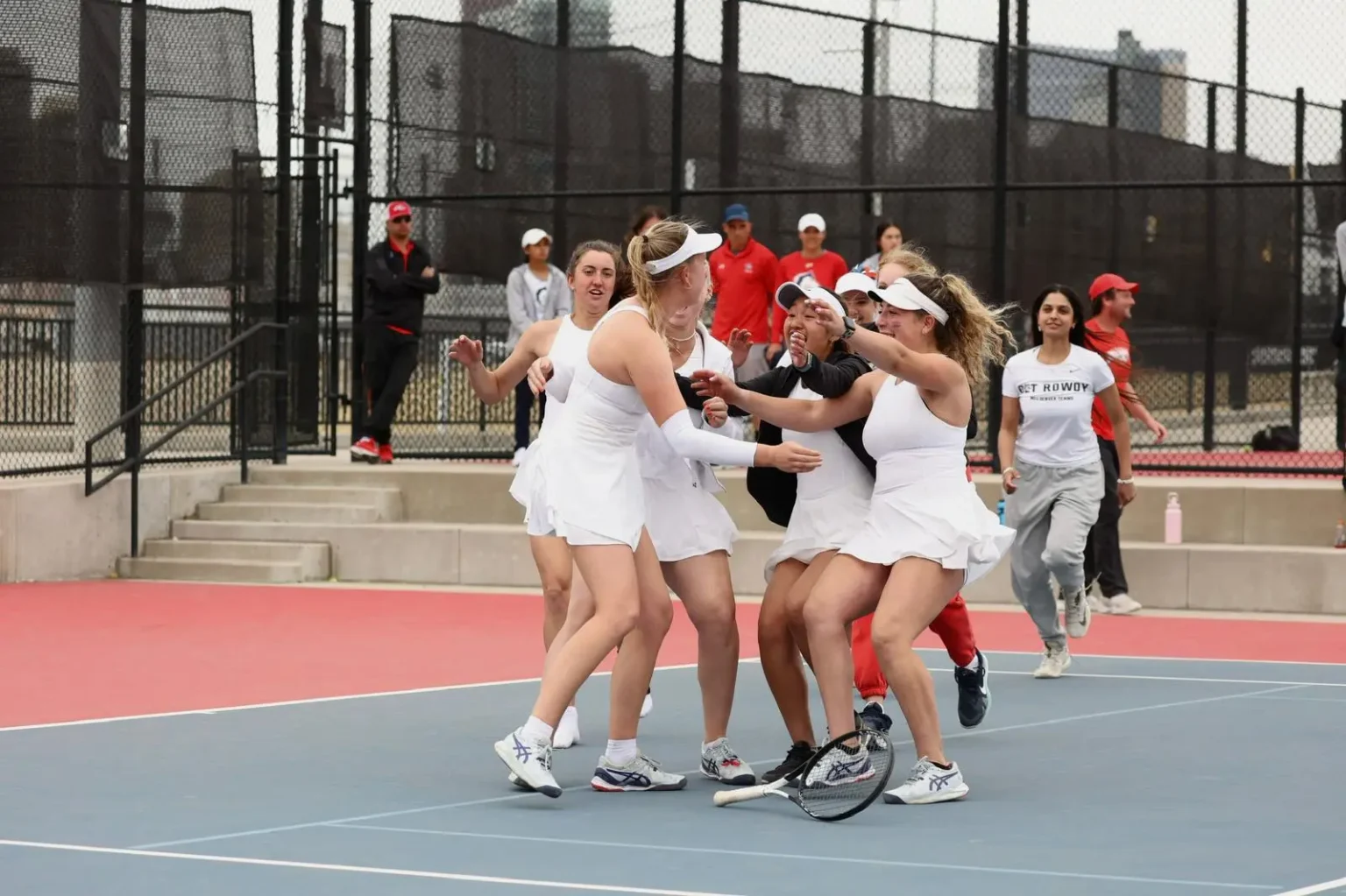
运动员的心理健康是一个重要议题,由于其对整体健康福祉的影响,如今正受到越来越多的关注。来自德国Keystone Sports的伊米(Immie)进一步阐述了学生运动员心理健康的各个方面。.
How to Come Best Prepared for the College Soccer Season
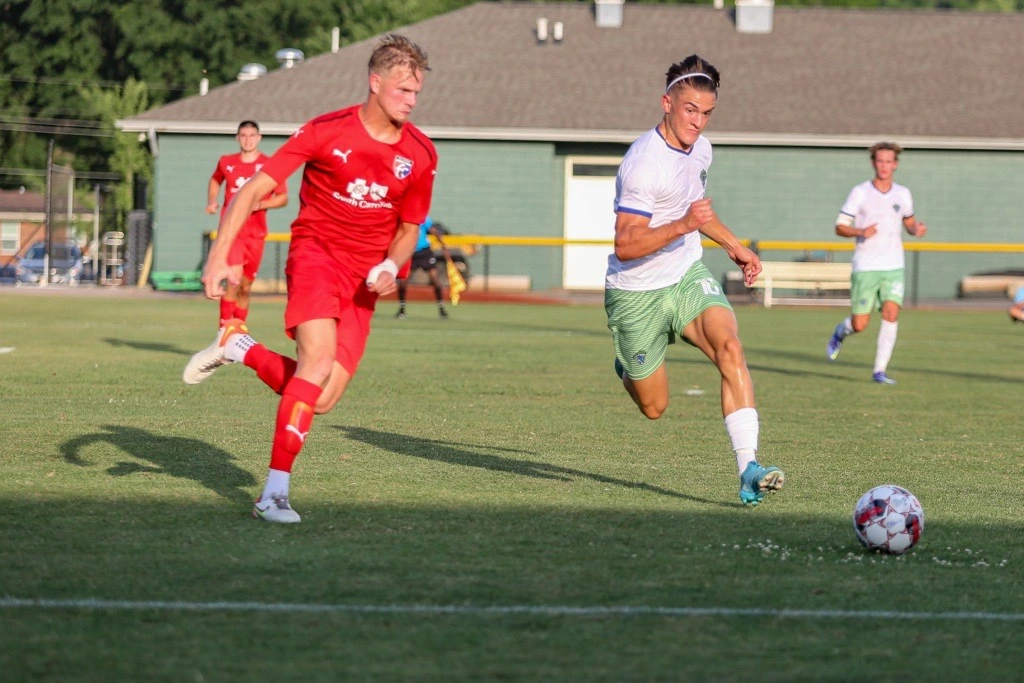
Ready to excel in the upcoming college soccer season? Marius from Keystone Sports Nordics guides you through the key strategies for optimal pre-season preparation. Learn how to stay in shape off-season and make a strong start for a successful season!
 English
  简体中文
简体中文  日本語
日本語