
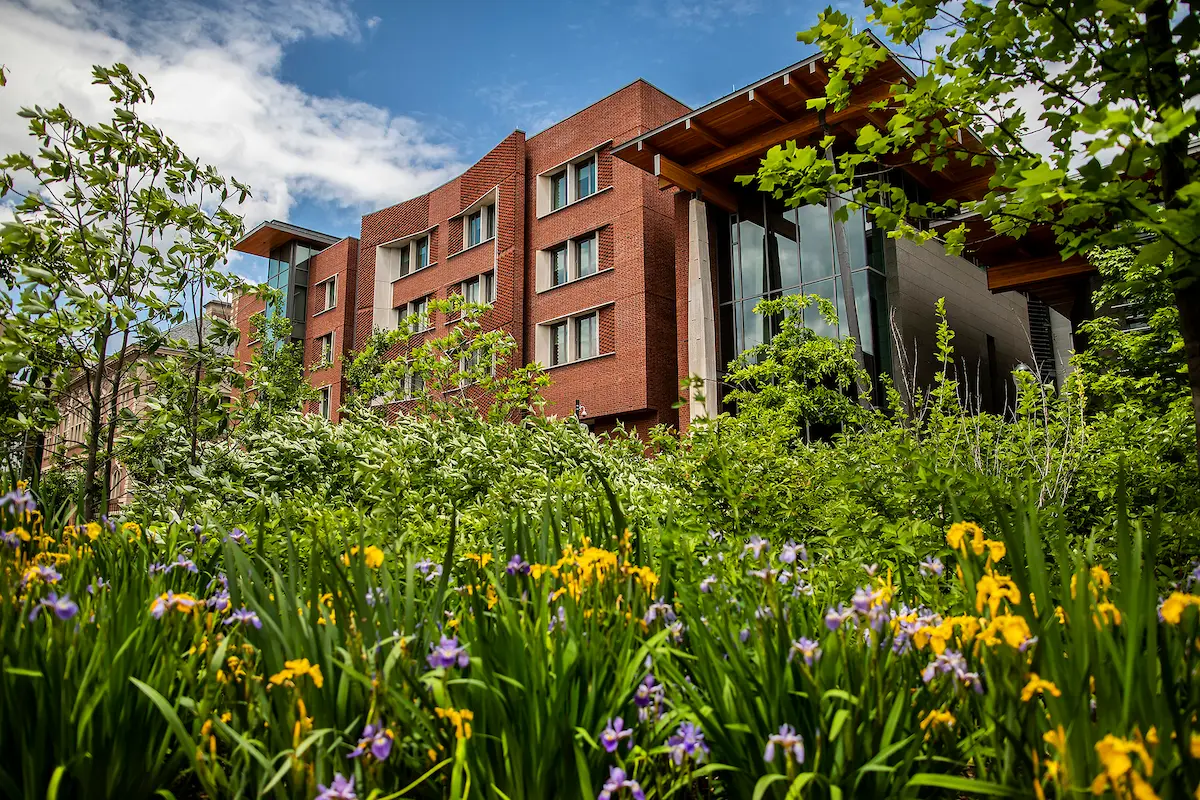
Types of Housing for College Students
Find the best college housing option for you
One of the first big questions before starting university is: “Where will I live?” This is especially true if you’re an international student moving to the US for the first time. Understanding the different types of housing for college students will make things a lot easier when it’s time to choose.
In the US, college students have access to different types of accommodation, each with its own style, cost, and level of independence. Keep in mind that some universities may have housing requirements, like asking first-year students to live on campus.
In this article, we’ll go through the four most common types of housing for college students:
- College dorms
- Student apartments
- Off-campus apartments
- Homestay
We’ll explore what each option is really like, plus the pros and cons, so you can find the option that fits you best.
1. College Dorms (On-Campus Housing)
College dorms, also known as dormitories or residence halls, are living spaces located on campus. Universities offer different types of college dorms like shared rooms, suites, or apartment style units.
Most first-year students choose dorms because they’re close to classrooms, gyms, dining halls, and sports facilities. Dorms are especially convenient for student-athletes with busy schedules, offering quick access to training facilities and campus resources.
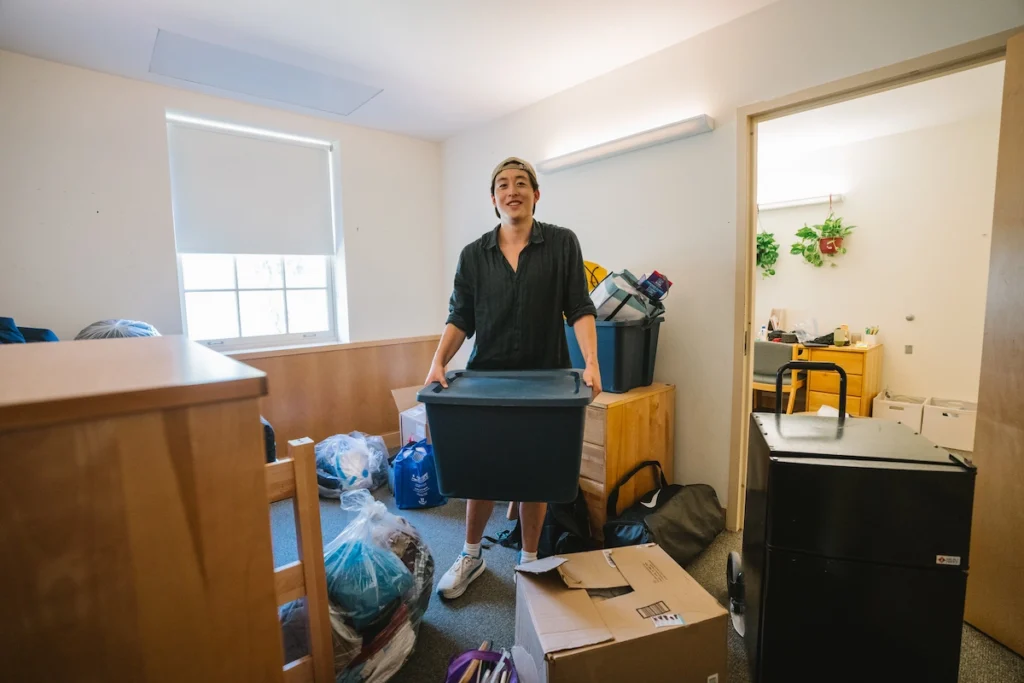
Students typically share a room with one or two roommates. Bathrooms are often shared with others on the same floor, though some dorms offer private or semi-private options. Most dorms also include common areas such as lounges and study rooms, perfect for relaxing, doing homework, or meeting new people.
Meals are often included in a meal plan, which means you can eat at the campus dining hall as much as you want, saving you time and effort on cooking.
College dorms also have Resident Assistants (RAs)—students who live there to help you adjust, organize events, and make sure everyone is safe. This creates a strong sense of community, which is especially helpful when you’re new to the US.
Angelos Avgeris, tennis player at Tusculum University, shared:
“Living on campus and being a part of a community taught me how to connect with people from different backgrounds. Campus life made college feel like more than just academics and athletics—it made it feel like home.”
Pros and Cons of College Dorms
Pros | Cons |
Easy to meet people and make friends | Less privacy |
Meals often included in a meal plan | Shared spaces can be noisy or busy |
Very close to everything on campus | Usually most expensive option |
Safe, with security and staff available | Rules set by the university |
2. Student Apartments Around Campus
After their first year, many students choose to move into apartments, often sharing with other students or teammates.
Student apartments are similar to off-campus apartments but are designed specifically for students. They’re built near the university and often have special amenities like a gym, study rooms, pool, or a social lounge.

Unlike regular apartments, these are often furnished, so you don’t need to buy a bed, desk, or couch. Many student apartments also have individual leases, which means you only pay for your room. If one of your roommates moves out, you’re not responsible for their rent.
These apartments are a good middle ground: you get more independence than a dorm but still live in a student environment. They often organize social events to help students meet one another.
Pros and Cons of Student Apartments
Pros | Cons |
Modern, comfortable, often fully furnished | Can be more expensive than regular apartments |
Often includes Wi-Fi | Farther from campus than dorms |
Good mix of independence and community | You handle your own meals and cleaning |
Many student-friendly amenities | Availability can be limited in some areas |
3. Off-campus Apartments
Off campus apartments give you more independence. You can choose where you want to live, set your own rules, and have more privacy.
However, living off campus also means more responsibility. You need to pay rent every month and cover bills like electricity, water, and internet. You’re also in charge of cleaning, cooking, and making sure the apartment is furnished—some apartments in the US come empty, so you might need to buy furniture.
Transportation is another factor to consider. If your apartment is far from campus, you might need a car, bike, or to use public transport. Some universities offer free shuttle buses to nearby student areas, which can make things easier.
Pros and Cons of Off-Campus Apartments
Pros | Cons |
More independence and privacy | Must pay rent and utility bills (electricity, internet, etc.) |
Cheaper option | Need to organize transportation if far from campus |
Quiet and personal space | May need to buy furniture and supplies |
Choose your own roommates | Less connection to campus life |
4. Homestay (Living with a Host Family)
Some international students choose to live with an American host family, an option known as a homestay. While this is less common for student-athletes and is typically offered by smaller colleges, it can be a great cultural experience. If you’re interested, check with your university to see if they have a homestay program available.
When you stay with a host family, you usually have your own bedroom and share other spaces like the kitchen and living room. Meals are often included, and you’ll be treated like part of the family.
This option is great for students who want to experience American culture firsthand, improve their English, and have extra support as they settle in. It can also be comforting for families to know their student is in a home environment instead of a dorm or apartment.
The downside is that you won’t have as much independence, and you may live farther from campus or your teammates. Social life can also be different because you won’t be surrounded by other students in the same way as dorms or apartments.
Pros and Cons of Homestay
Pros | Cons |
Great way to learn about American culture | Less independence |
Family support and a “home feeling” | May be far from teammates and campus |
Meals and laundry often included | Fewer opportunities for a typical student social life |
Helps improve English and adapt faster | Not available at every university |
How Keystone Sports Can Help You Find the Perfect Accommodation
At Keystone Sports, we’ve helped over 15,000 student-athletes move to the US and start their college journey thanks to sports scholarships. スポーツ推薦 give you the chance to compete in your sport while earning a degree at a US university.
We understand how important it is to feel comfortable and safe in your new home. That’s why we provide guidance on finding suitable housing for college students, connect you with other athletes who’ve gone through the same experience, and share practical tips on what to pack and what to expect.
Ready to start your college journey in the US? Complete our free evaluation form and our team will get in touch with you.
この記事をシェアする

著者について
Lorena Montañés
Lorena Montañés, SEO Specialist at Keystone Sports, pursued her career in the U.S., playing DI soccer at California State University, Fresno. There, she earned degrees in Mass Communication & Journalism and Psychology. She later completed an MBA in Business Analytics while coaching at a Division II university. Now, she aims to empower other student-athletes to achieve their dreams and have a life-changing experience.
関連記事

大学のeスポーツ奨学金とは何か、そしてそれを獲得する方法とは?
Eスポーツはその人気が急騰し、競技スポーツへと進化を遂げました。エキサイティングなニュースとして、現在、アメリカの大学がEスポーツプレイヤー向けに奨学金を提供しています。この記事では、大学のEスポーツ奨学金を獲得する方法について、すべての詳細をお伝えします。.

アメリカでラグビーの奨学金を取得する方法
アメリカの大学でラグビーの人気が高まるにつれ、留学生がラグビーの奨学金を取得する機会が増えています。ラグビーの奨学金について知っておくべきこと、そして獲得する方法のすべてをご紹介します!

学生アスリートのための大学編入ガイド
学生アスリートとしての編入は複雑なプロセスとなる場合がありますが、適切なサポートがあれば、学業とアスリートとしてのキャリアの両方を高める絶好の機会となります。キーストーン・スポーツは、あなたにぴったりの環境を見つけるためのプロセスのあらゆるステップを簡素化します!
 English
  简体中文
简体中文  日本語
日本語